Workhiro
Resume keyword filtering became structured human evaluation with clearer candidate data and less automated judgement.
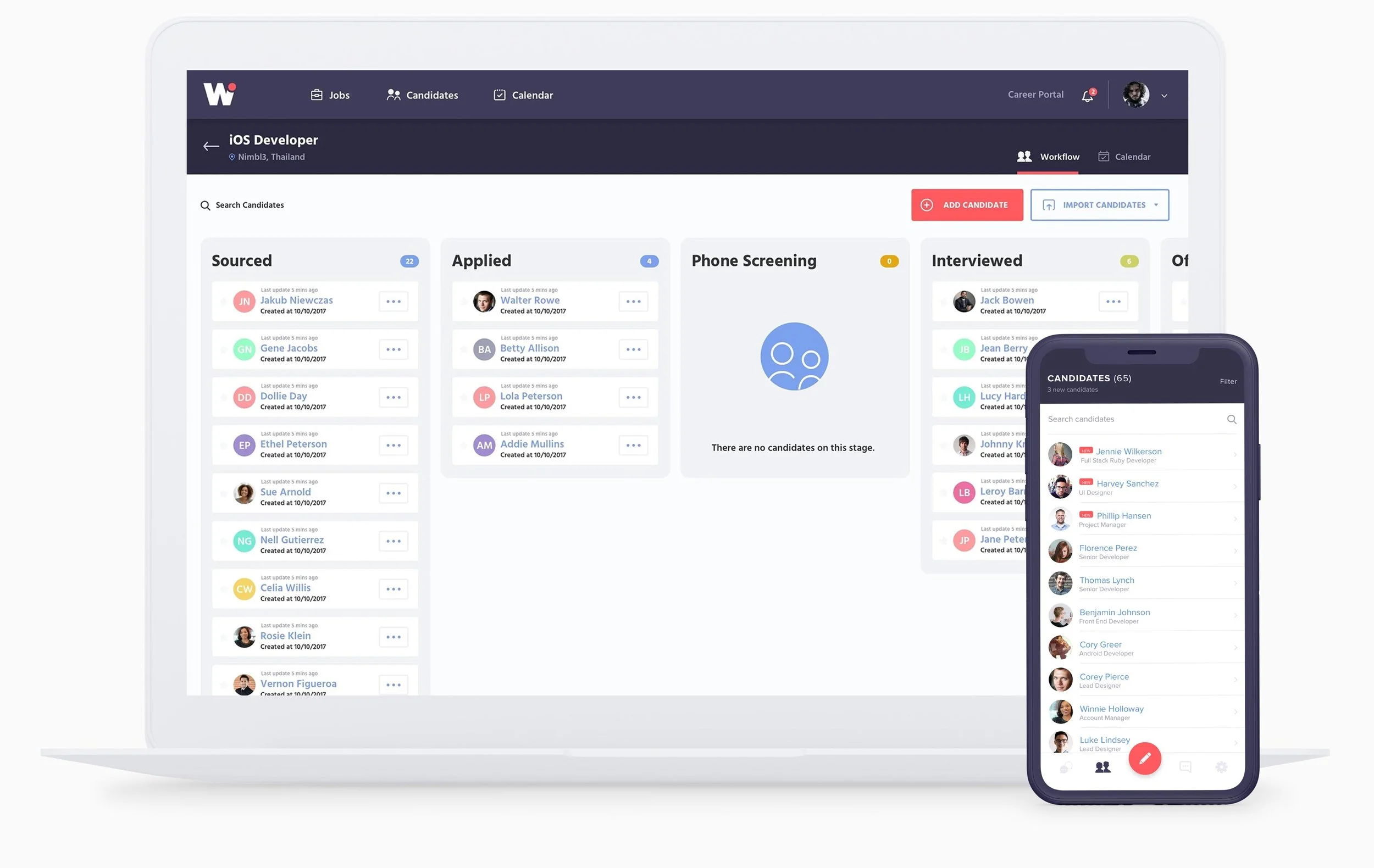
Workhiro was built around a quiet problem in recruitment: traditional applicant tracking systems eliminate strong candidates before a human ever sees them, because they’re filtering on keywords and document format rather than skill and experience.
Context
Hiring workflows differ widely by team, role, and region. The system had to support multiple pipelines, approval paths, and data views without fragmenting into a different product per customer. The challenge was holding that flexibility inside a single, predictable interface that stayed fast to read.
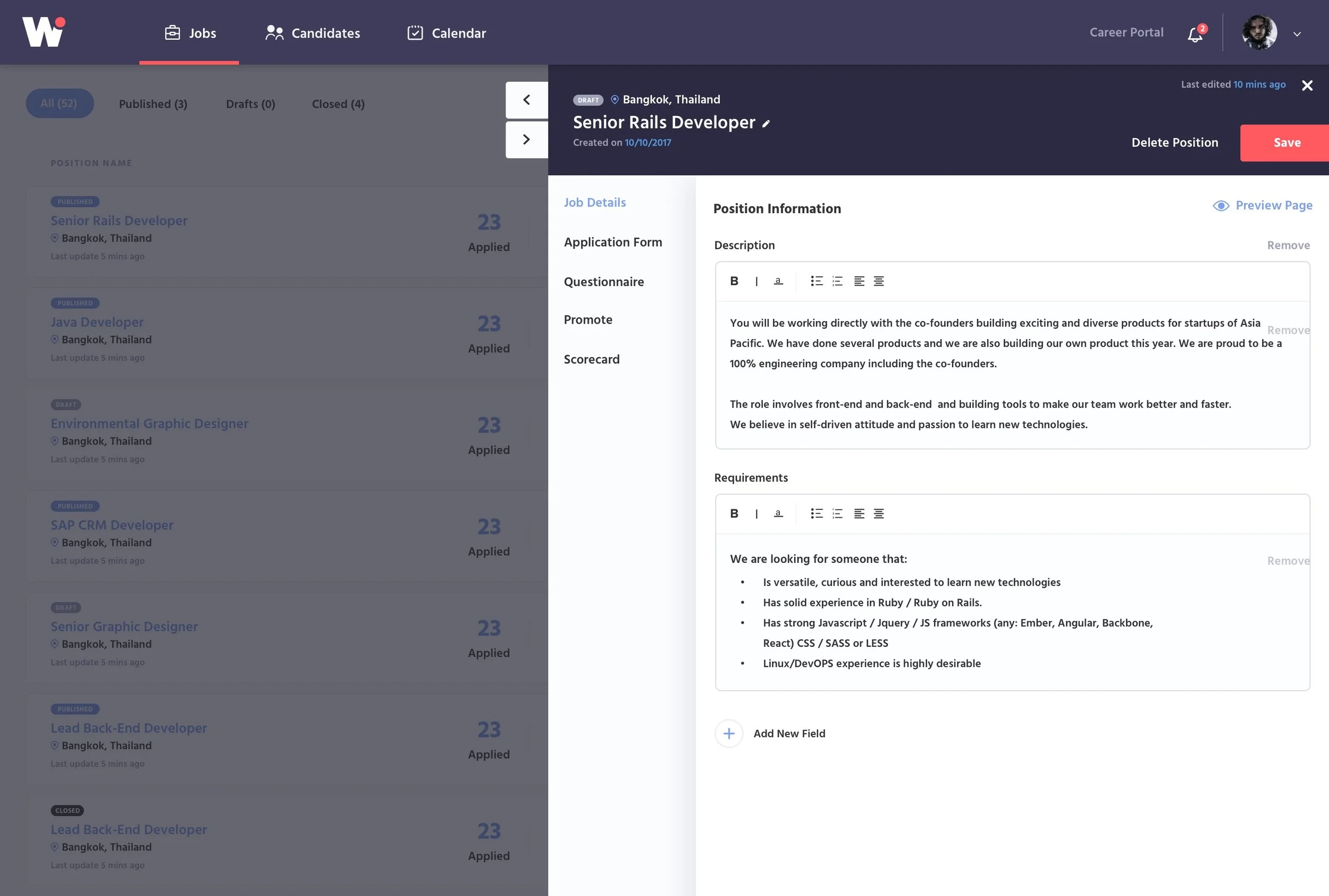
What I designed
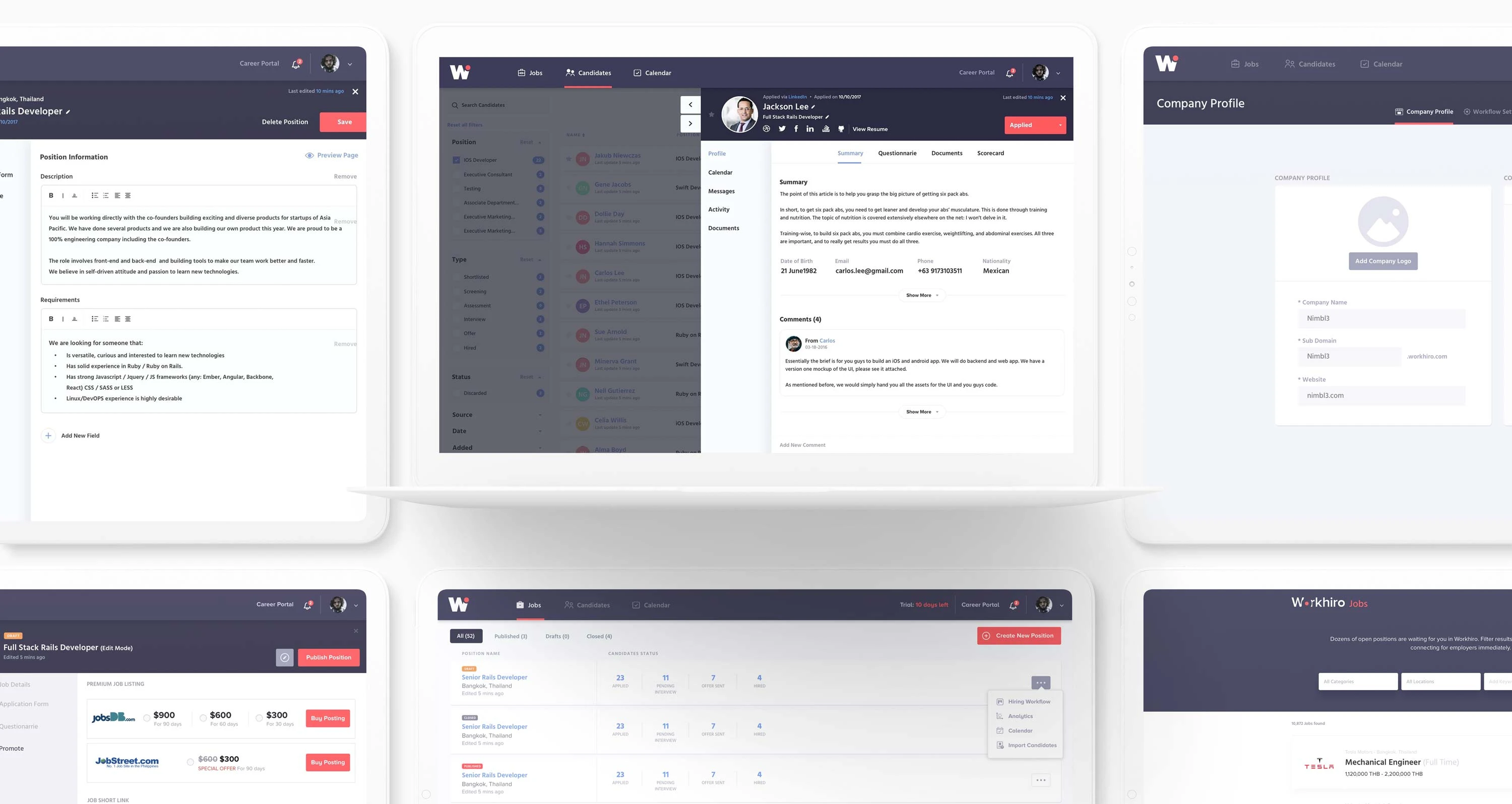
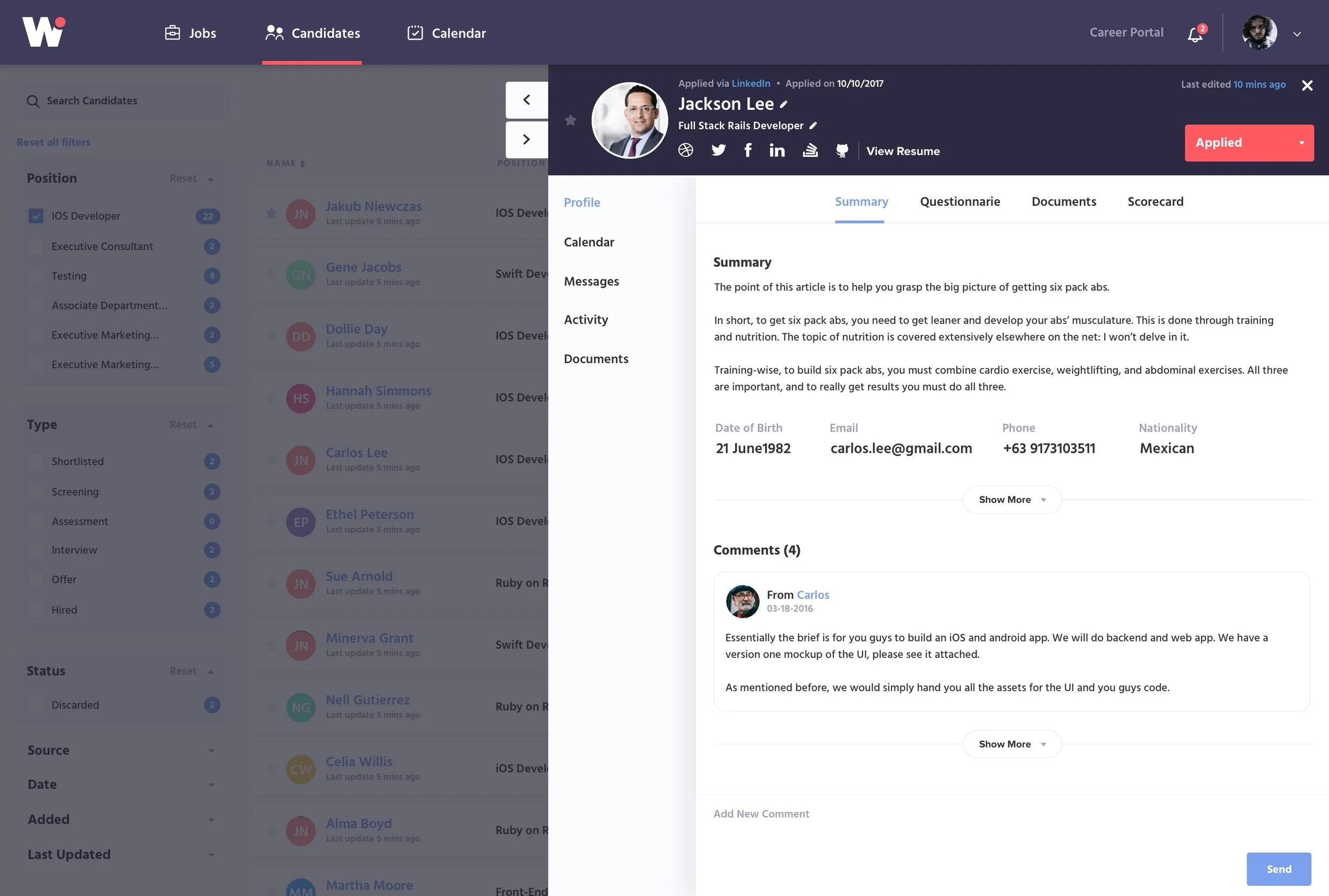
A kanban-inspired evaluation system where each candidate card carried the right depth of data at the right time: list view for scanning, drawer for reviewing, profile for committing. Information architecture that scaled from 10 candidates to 10,000 without changing the interaction model. Annotations, evaluations, and progress tracking all lived in one flow so teams could collaborate without losing context.
The trade-off
Resume-parsing AI was peaking at the time. Customers wanted automated screening, automated scoring, automated rankings. We held that line: the platform would not auto-rank candidates. Recruiters could sort, compare, and shortlist with structured data, but ranking remained a human judgement supported by the system rather than performed by it. That decision cost us the easy demo but kept the product honest about what it was for.
What it changed
Strong adoption from pilot teams. Recruiters reported faster evaluations and better cross-team collaboration. The structured design system became a model for later HR tools, demonstrating that simplicity and data transparency can reduce bias without trading away pace.
Role
Senior Product Designer. Owned design direction and system architecture, partnered with engineering on data modelling.