belowmrkt
Manual property filtering became search shaped by pauses, shortlists, revisits, and browsing behavior.

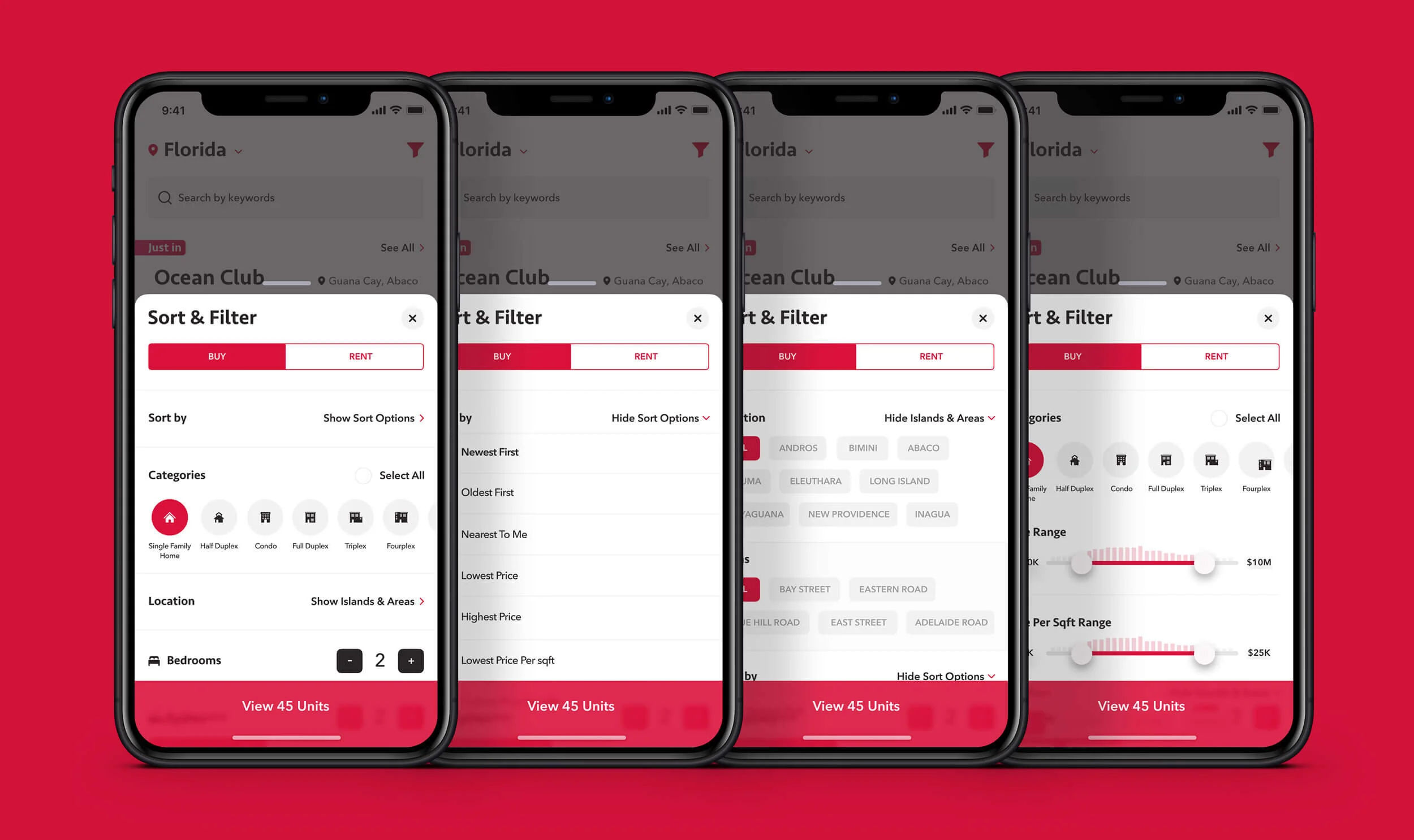
belowmrkt was an adaptive property-search product. Instead of asking users to set filters and re-set them on every visit, the system learned from quick scans, shortlists, and revisits, refining results in real time without ever showing the user a slider.
Context
We had weeks, not months. Almost no training data. The model had to start learning from the very first session, and the design had to prove that intelligence without breaking the simple act of browsing listings.

What I designed
The interaction model around micro-patterns: which cards a user paused on, which they shortlisted, which they came back to. Each became input for the model. The interface stayed minimal by design. Every gesture carried weight, every scroll improved the next result.
The decision that shaped it
Hide the intelligence. The category convention was to expose the AI: confidence scores, reasoning panels, “we recommended this because…” explanations. That language reads as marketing for the model and noise to the user. We chose to make the system feel attentive but invisible: subtle layout shifts and result re-ordering instead of explanatory chrome. The trade-off was losing the “look how smart we are” pitch in exchange for an interface that felt intuitive rather than algorithmic.
What it left behind
Launched fast and gained early traction. Users spent less time adjusting filters and more time exploring listings. The pattern (letting a small model learn from interaction shape rather than explicit input) held up far better than its training data deserved.

Role
Lead Product Designer. Worked side-by-side with engineering on what the model could meaningfully respond to.