Stella
Natural-language data questions became visual business answers with confidence, source disclosure, and error states built in.
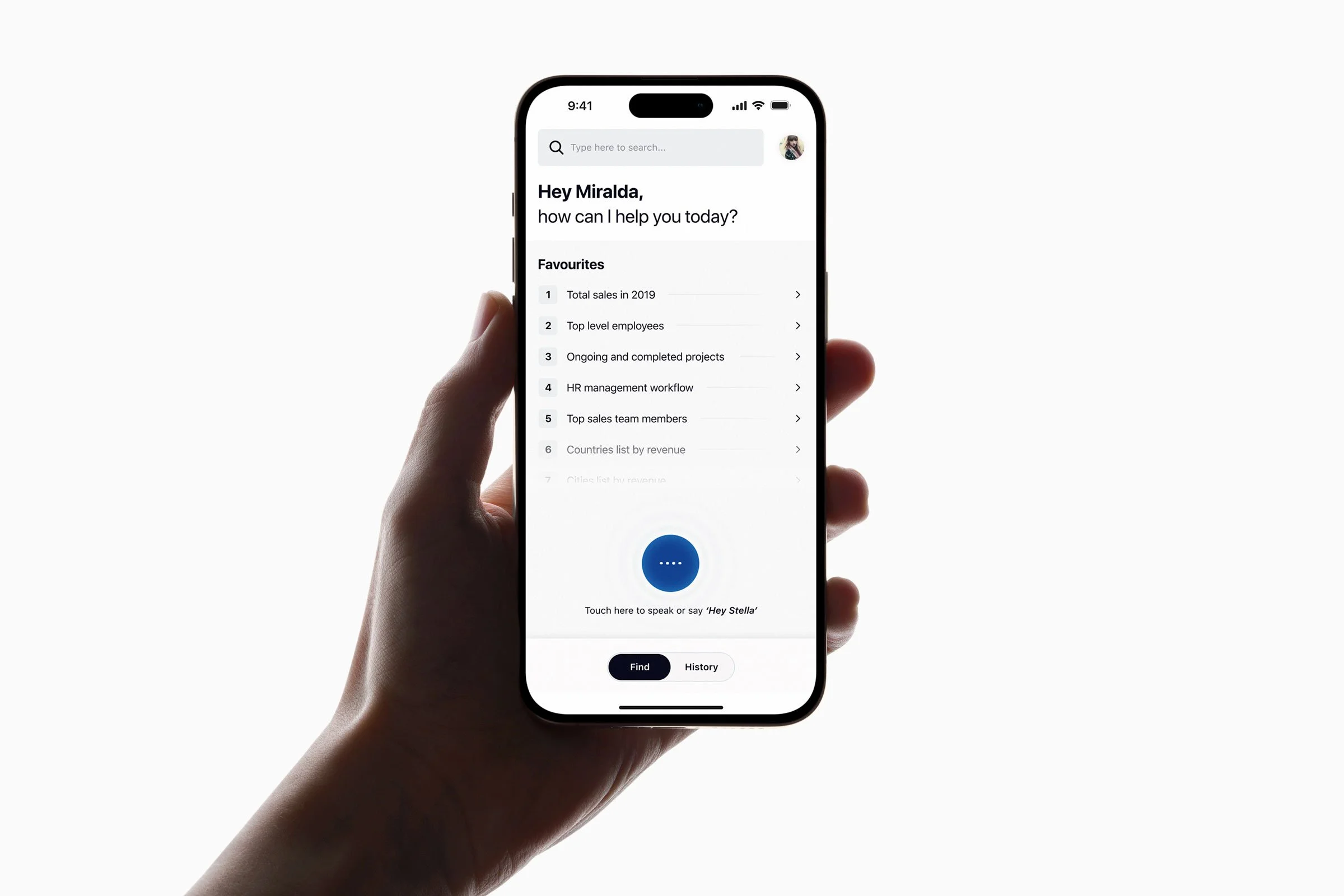
Context
Years before AI entered the product mainstream, Stella explored what it would mean for design to collaborate with intelligence. Not a product to launch, a working concept to learn from. How do you design an interface for a system that doesn’t yet behave predictably?
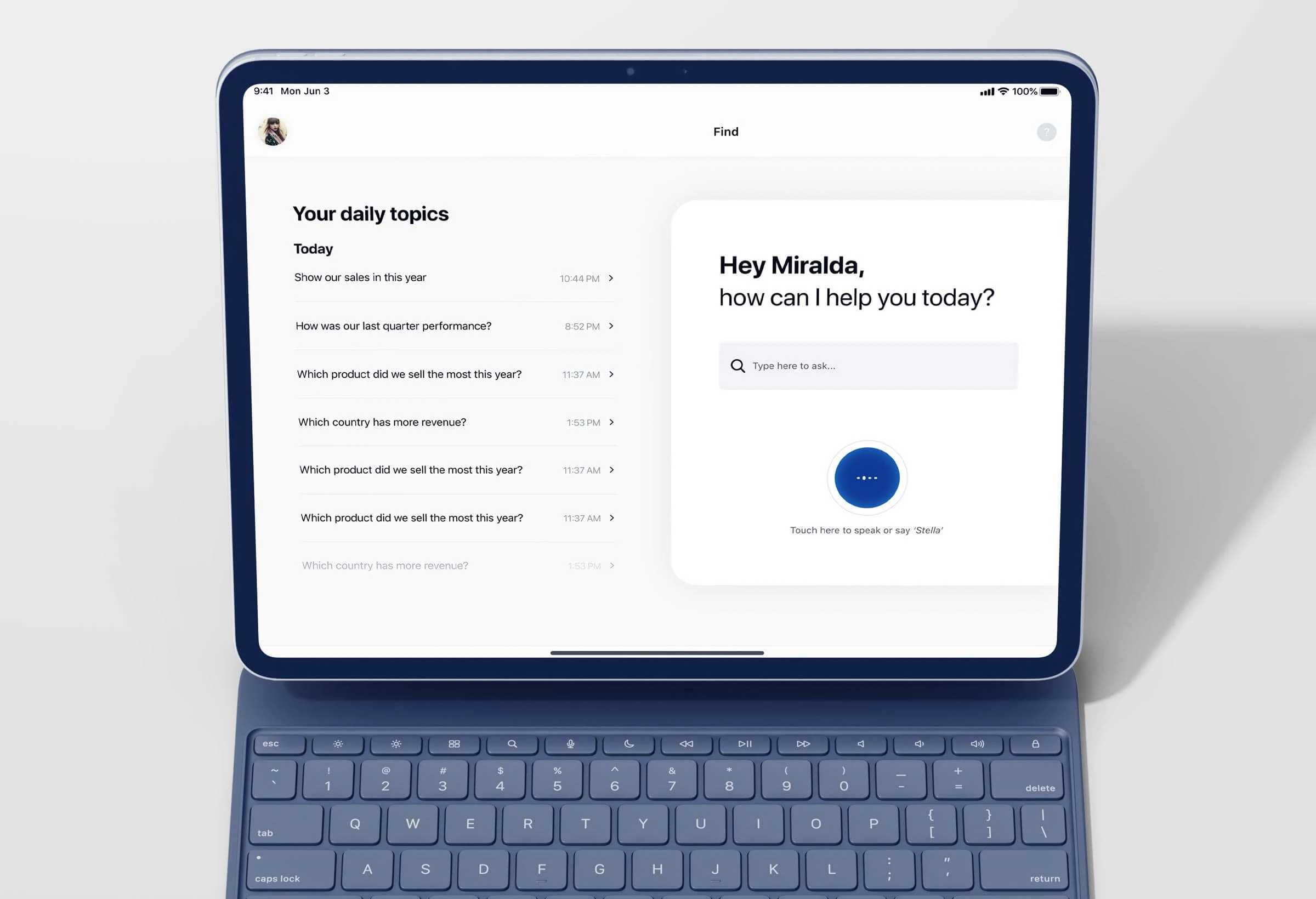
What I designed
The behavior, not the pixels. We mapped how someone might ask a system about their data, how it might interpret intent, how it might respond visually when its own confidence varied. Adaptive layouts, contextual feedback, conversation as a primary surface long before that pattern was named.
I led the design direction and worked alongside data scientists to translate abstract model output into tangible interaction. Each cycle pushed the line between static UI and dynamic response.
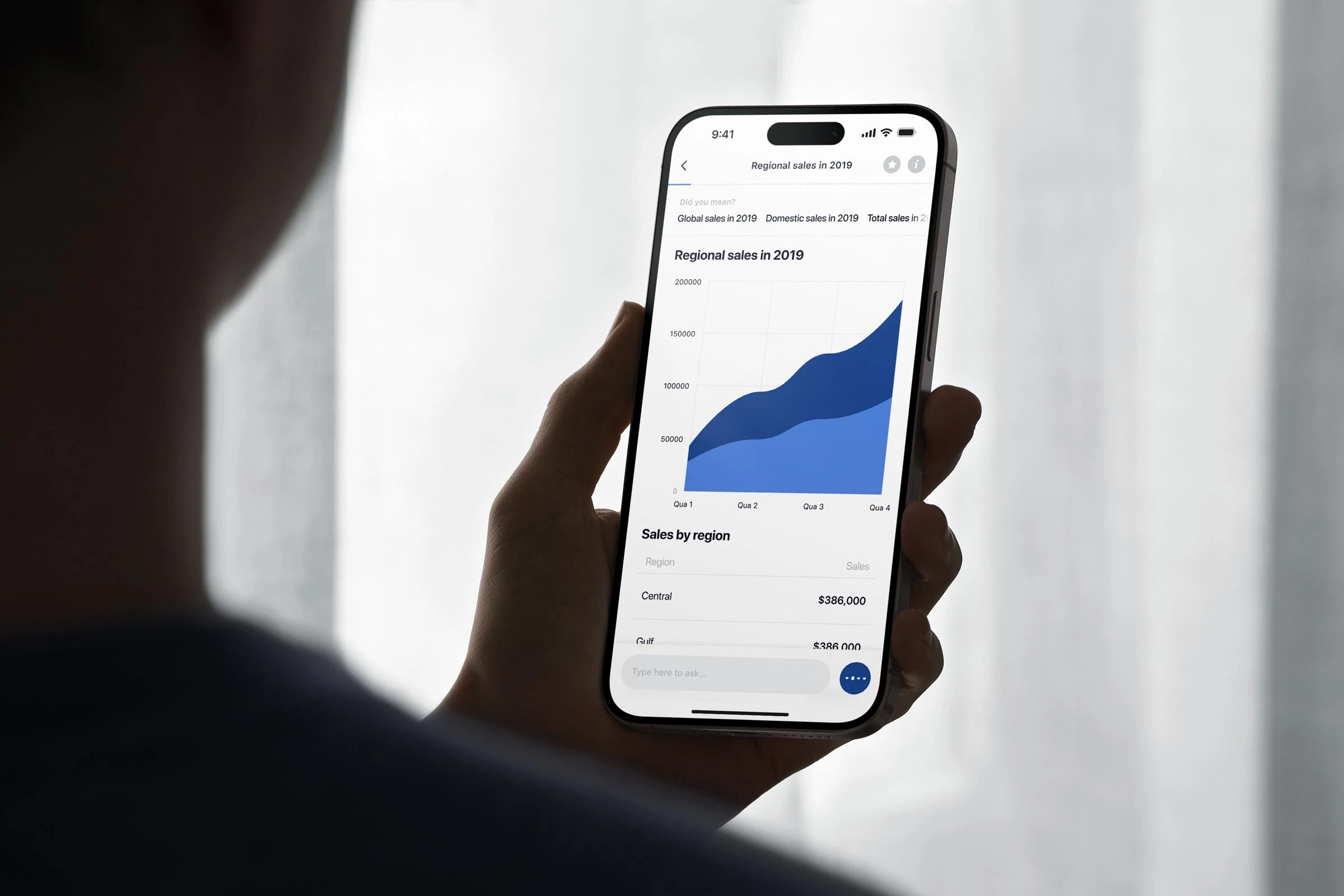
The decision that shaped it
Treat AI as a collaborator, not a feature. Information surfaced progressively rather than all at once. Motion reflected system thinking instead of decorating a transition. Errors were framed as learning moments rather than failures. The interface had to make uncertainty feel honest. The bet being that confidence theatre would erode trust faster than admitting what the system didn’t know.
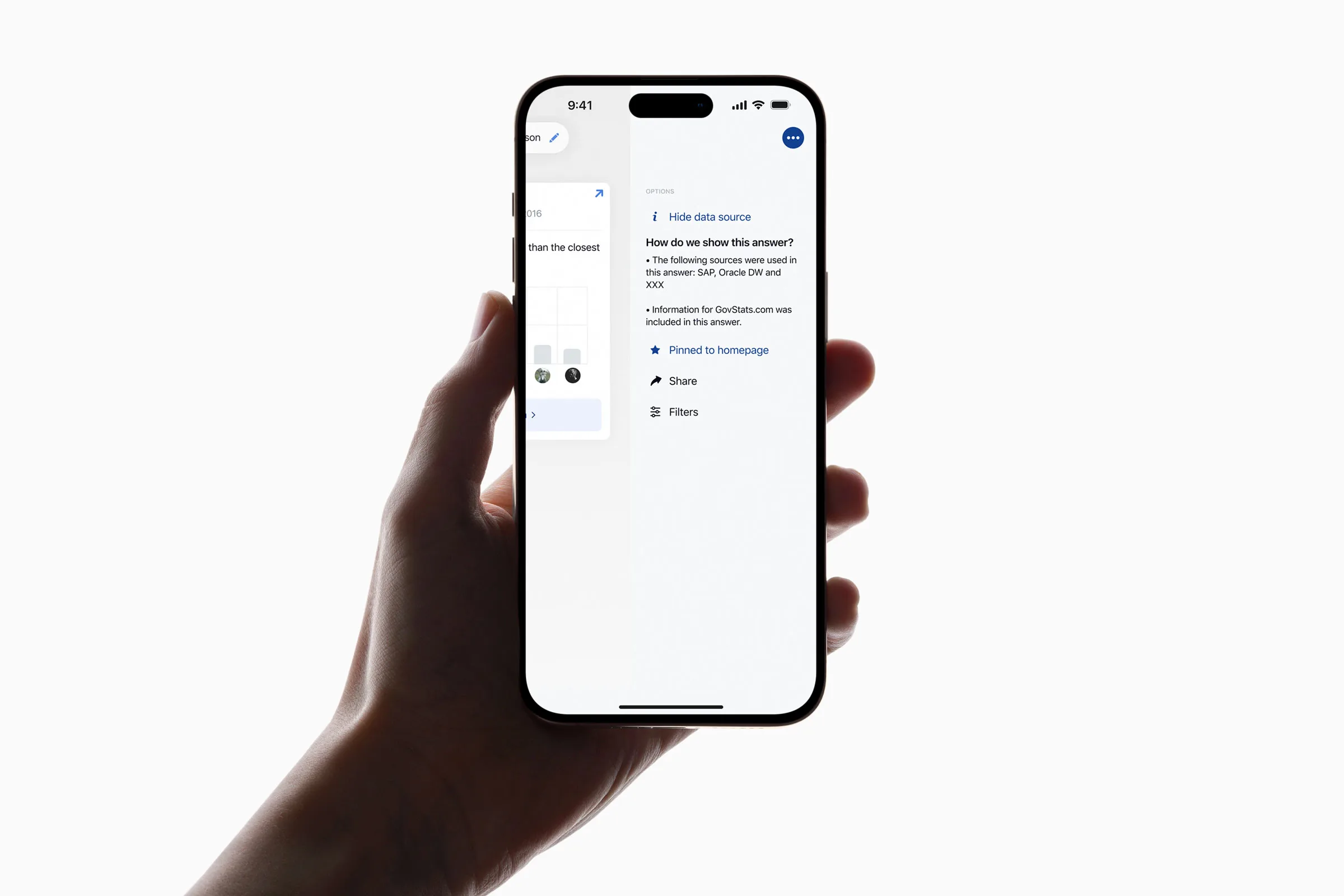
What it left behind
Stella never shipped. It became one of the company’s first working AI concepts and informed how later products visualised reasoning, confidence, and transparency. The pattern of treating model output as an artifact to be designed around, not a string to render, outlived the project itself.