Travelbook
A travel-story feed expanded into planning, booking, discovery, and reviews while keeping commerce inside the social journey.
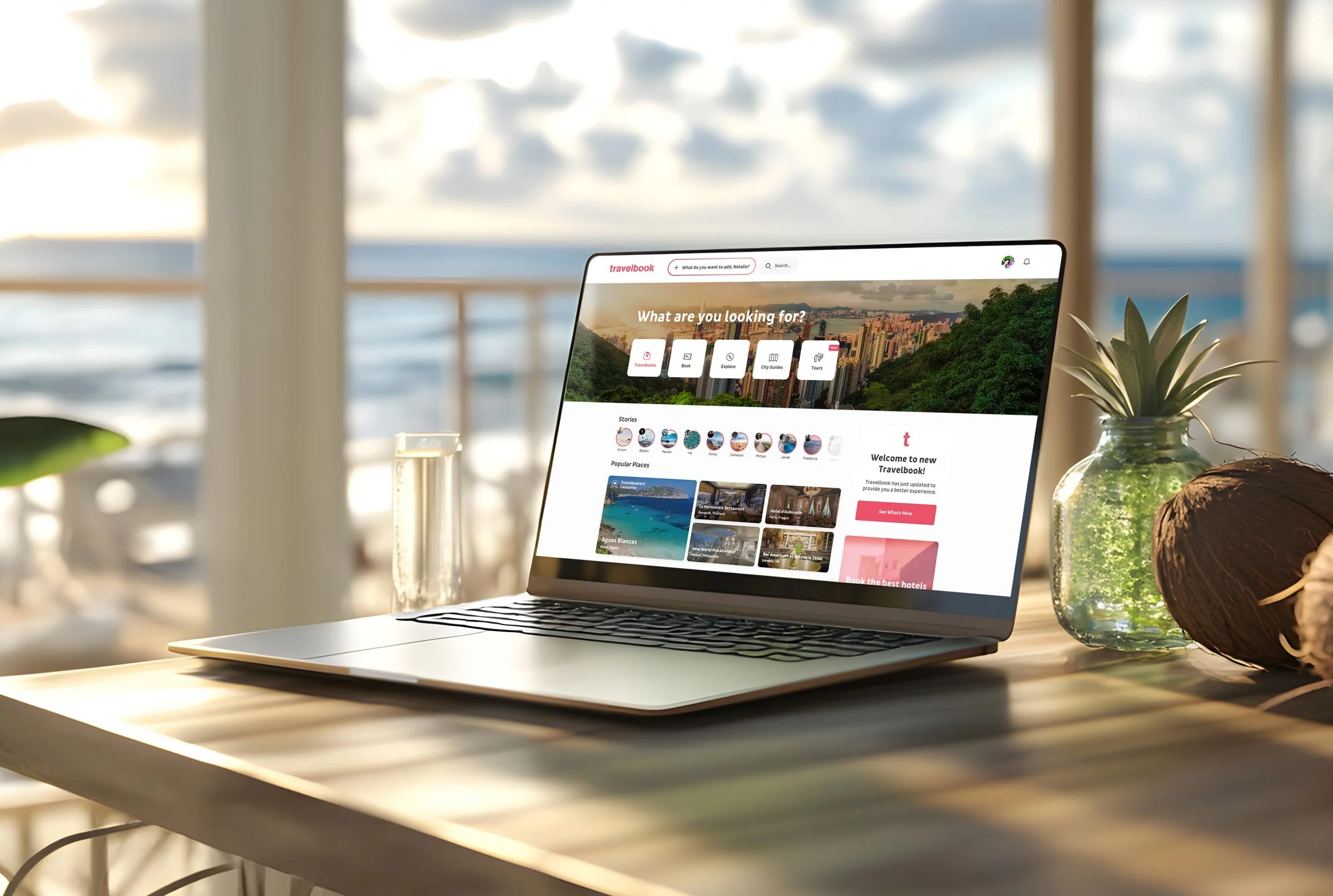
Travelbook started as a place where travellers shared stories. As the community grew, expectations shifted. Users wanted to plan, book, and review without leaving the product. The work was to evolve the platform without breaking what made it personal in the first place.
Context
The social roots were the asset, not the constraint. Booking systems, maps, and reviews added technical and design weight; each new feature risked crowding the interface or confusing intent. Small distributed design team, live product, no room for a clean rebuild.
What I designed
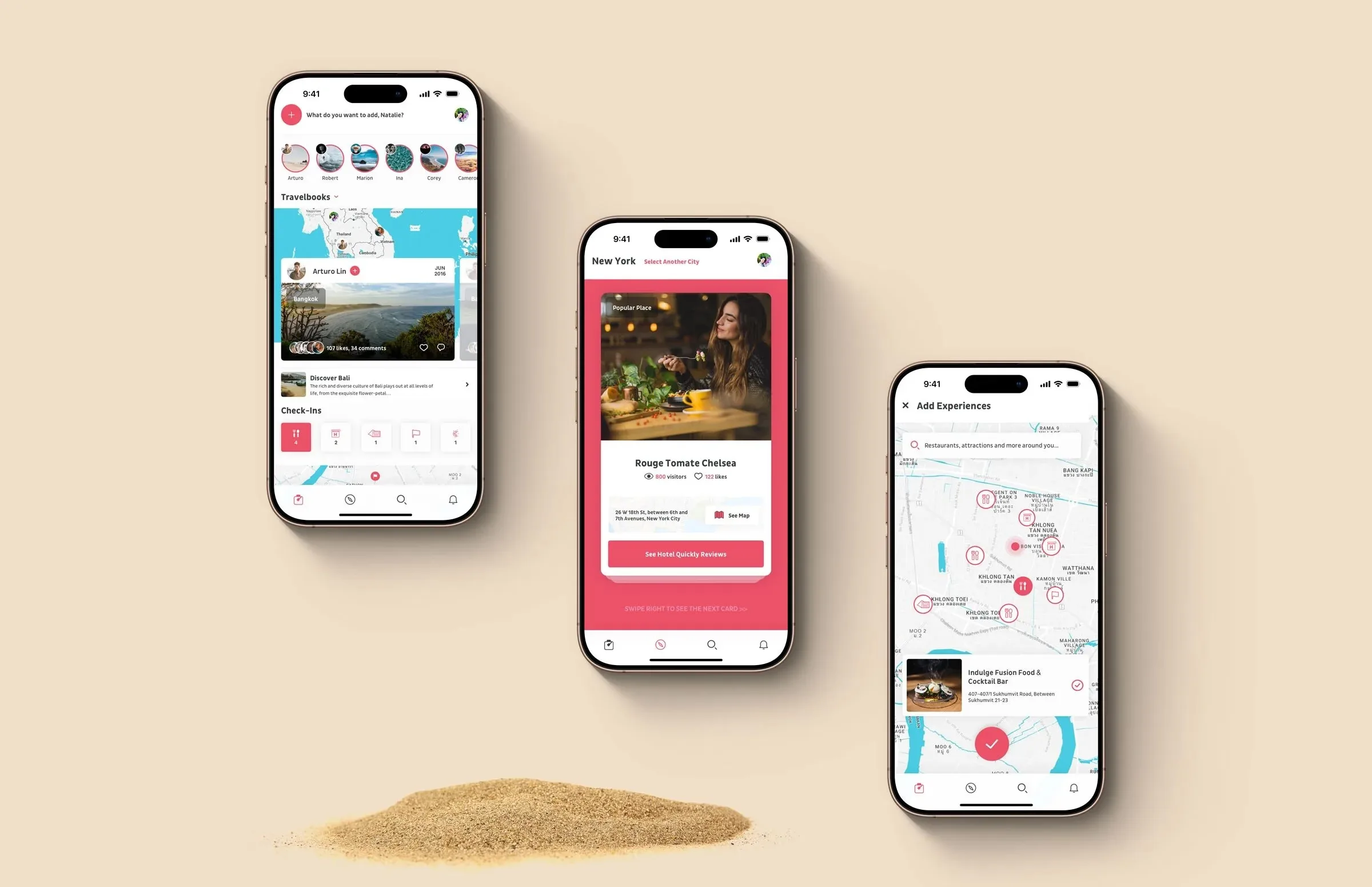
A modular architecture that let the platform expand feature by feature without losing structural or visual consistency. Core flows (feed, planning, booking, sharing) were redesigned around the insight that they were emotionally linked. People wanted to tell the story of a trip from start to finish, not stitch one together from four separate tools.
The trade-off
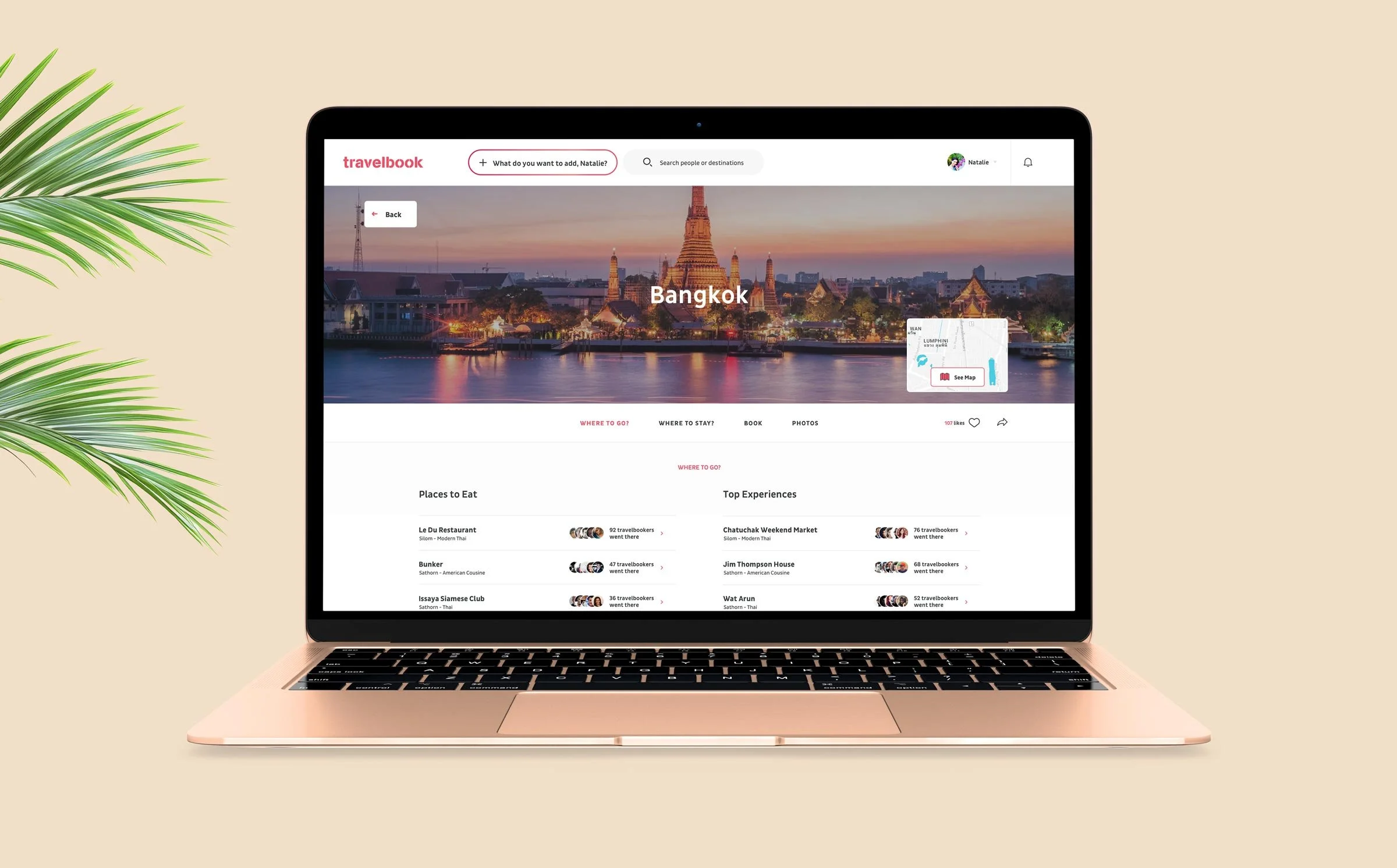
We tested two integration models with existing users. One pulled commerce out into its own “Booking” tab with a feature-first sign-up flow. The other kept navigation centred on the feed and surfaced booking actions in-line with the content. The feature-first version dropped social activity meaningfully; the in-line version preserved engagement and converted commerce as well or better. We chose the slower-feeling integration over the cleaner-looking one because community was the moat.
Role
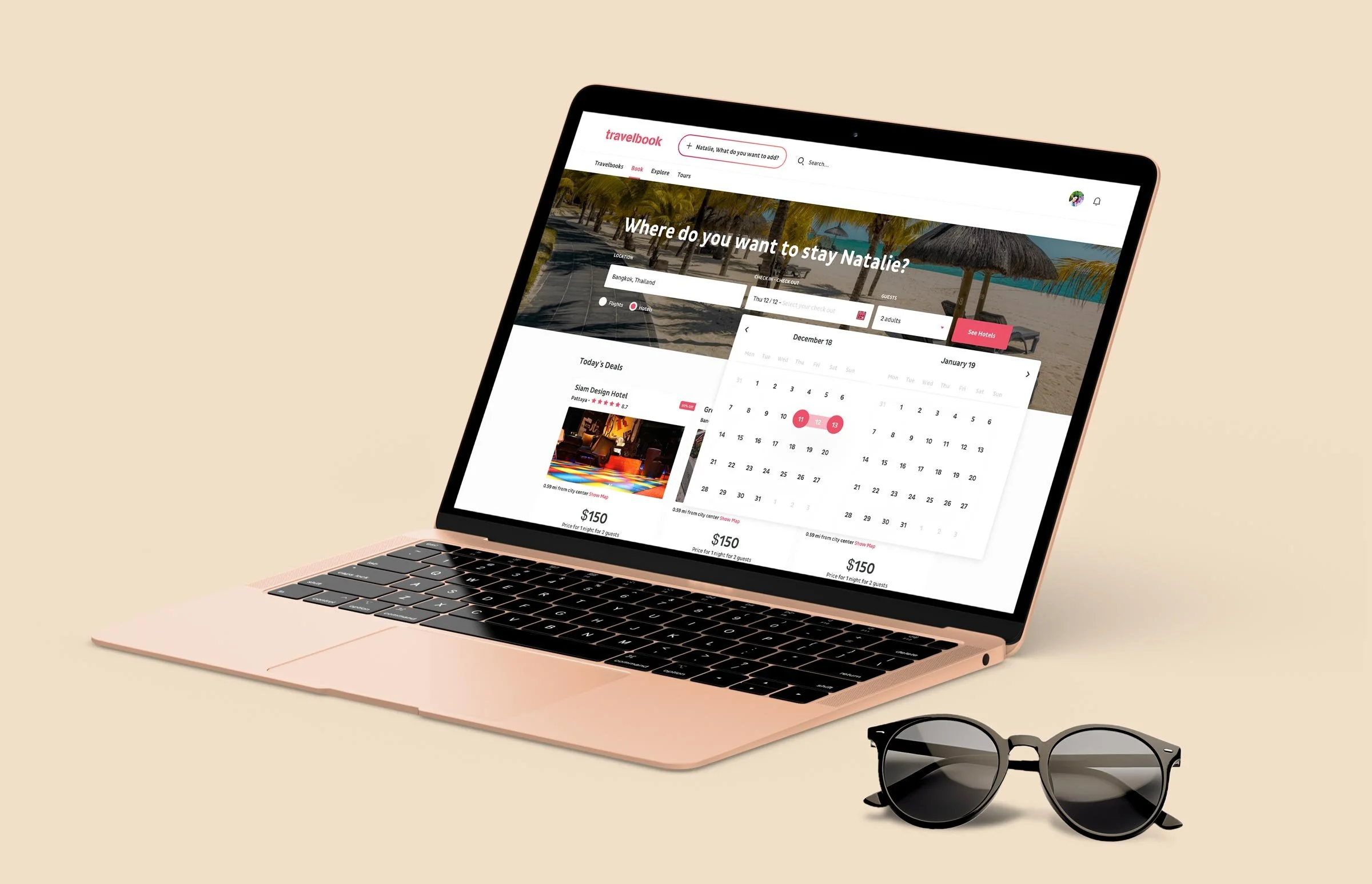
Lead Product Designer. Partnered closely with engineering on bridging social data, booking APIs, and user-generated content into a single coherent experience.