Braive
Clinical mental-health programs became structured digital modules that therapists, enterprises, and individuals could use.
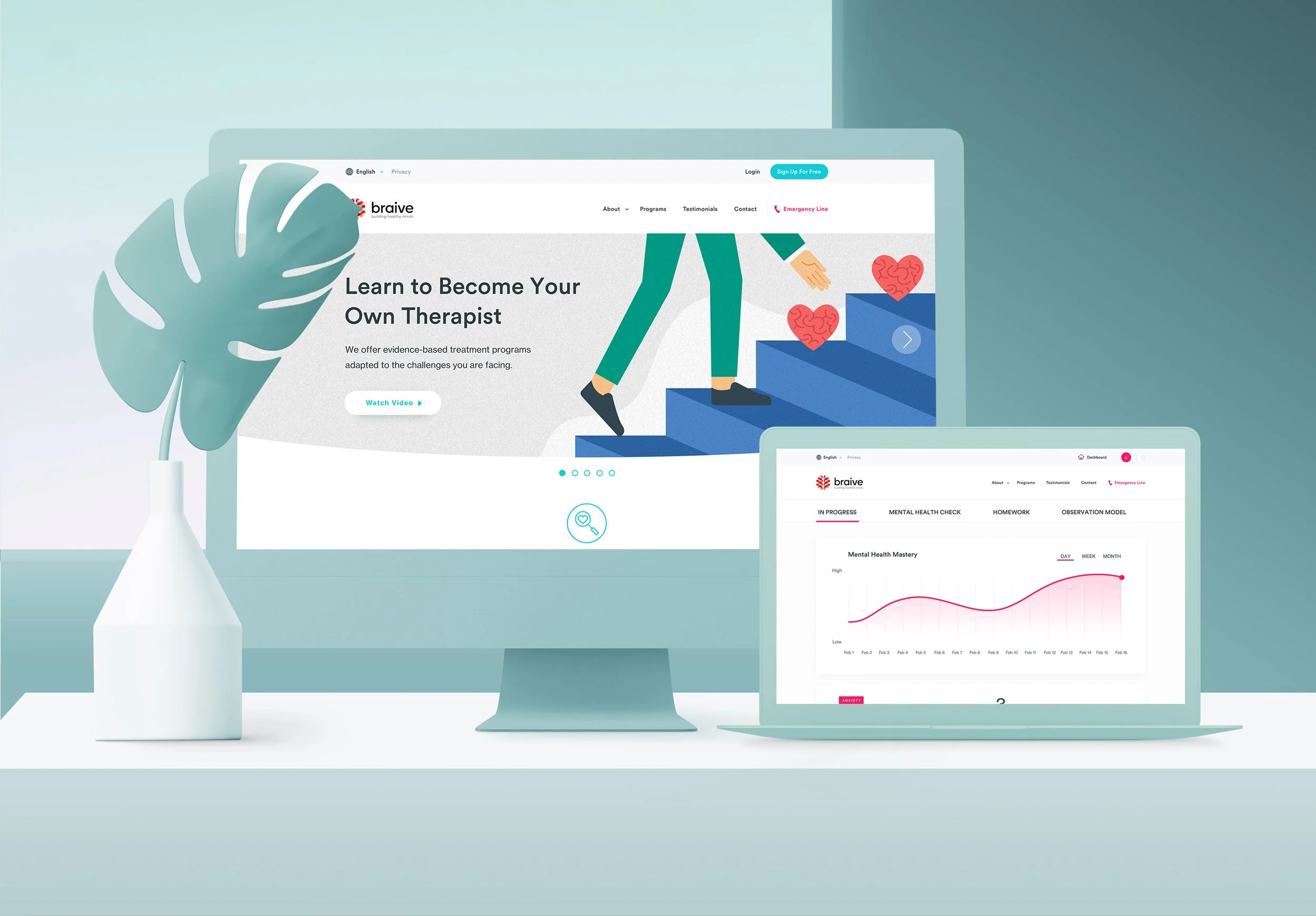
Braive is an evidence-based mental health platform: cognitive behavioural therapy delivered as a structured, clinical-grade product for individuals, workplaces, and clinics.
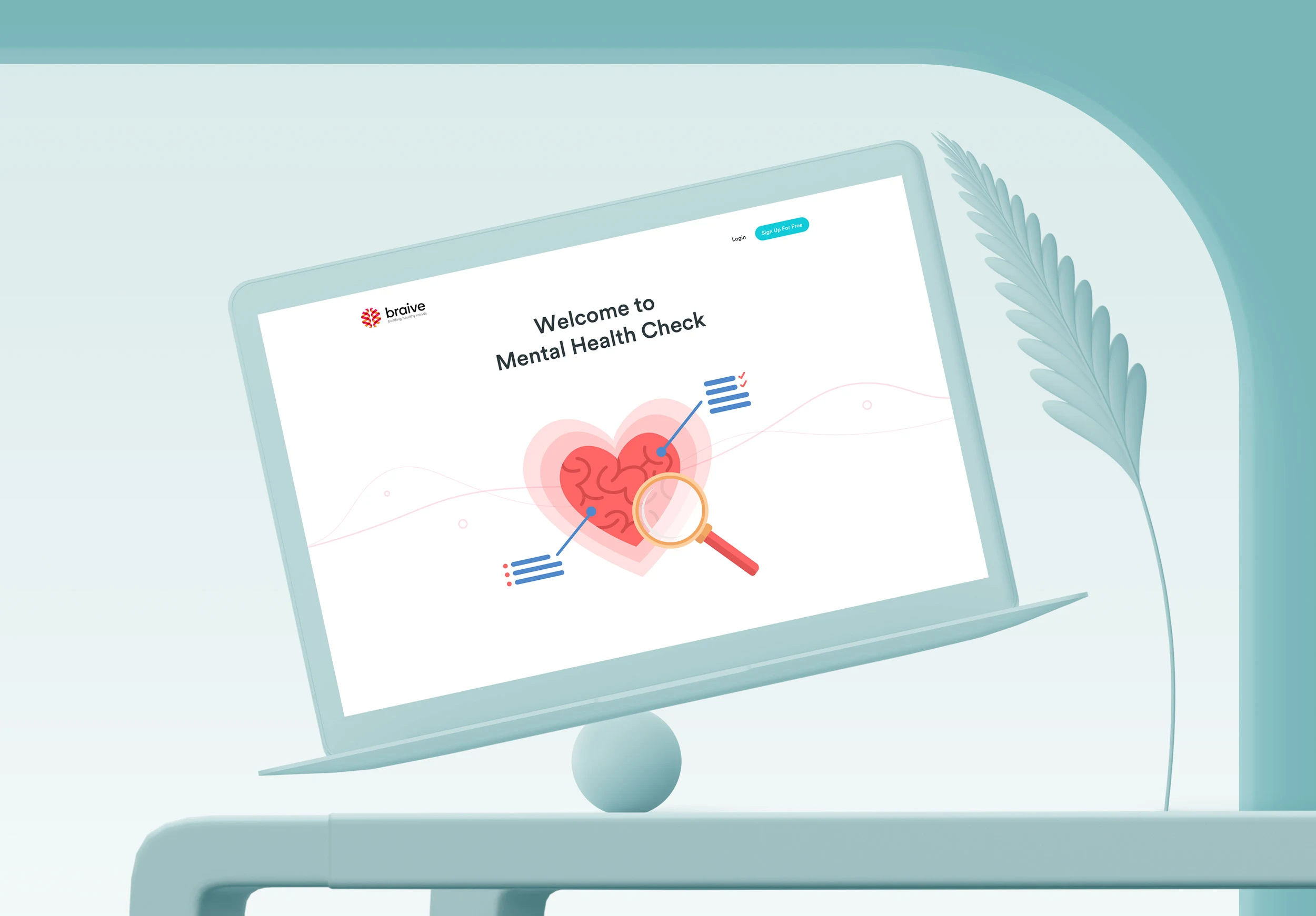
Context
Most digital therapy products felt either too clinical or too casual. Braive set out to make support accessible without making it feel transactional, and to do so under serious constraints: clinical evidence, regulated content, sensitive data, and review cycles that didn’t move on design’s clock.
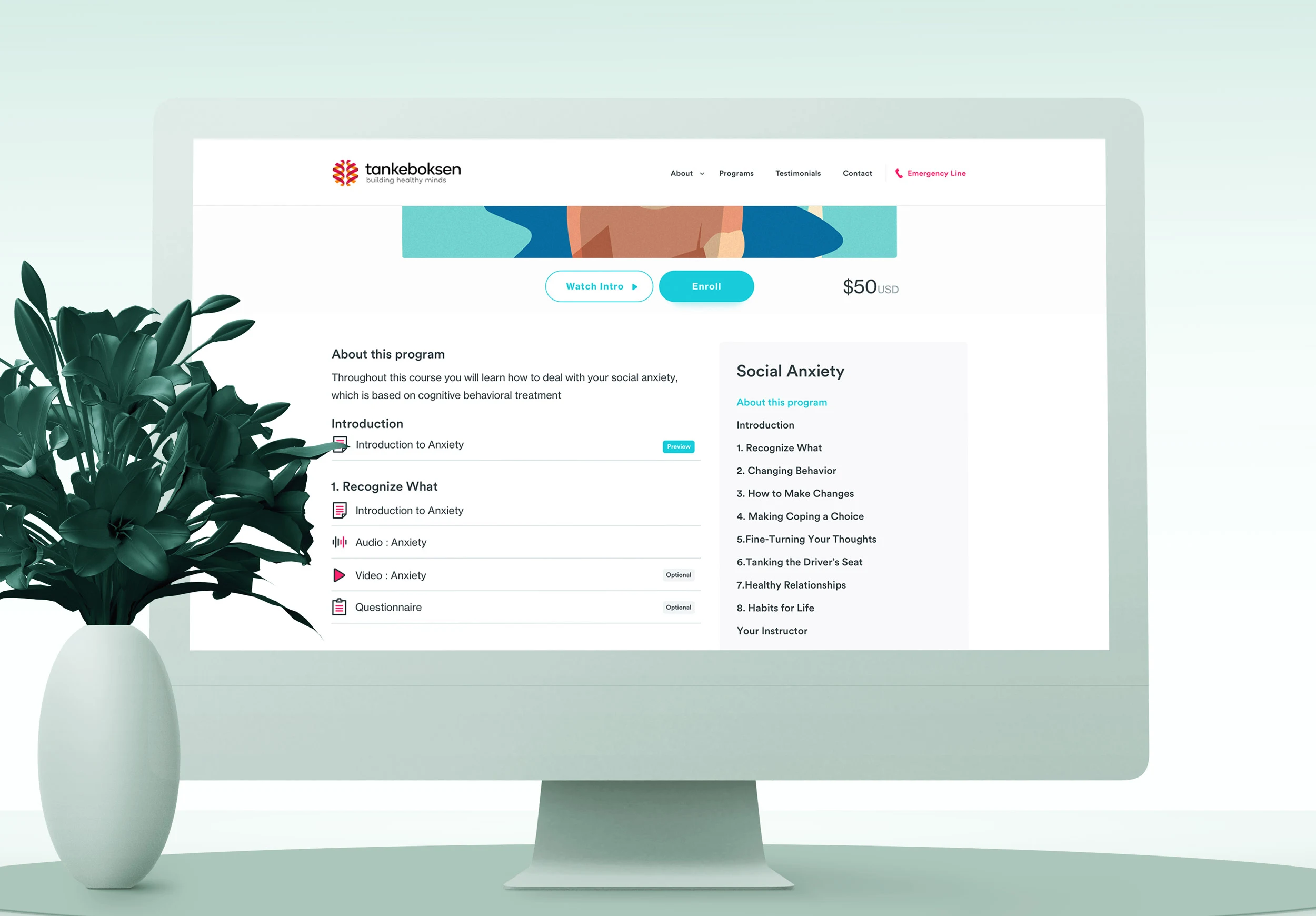
What I designed
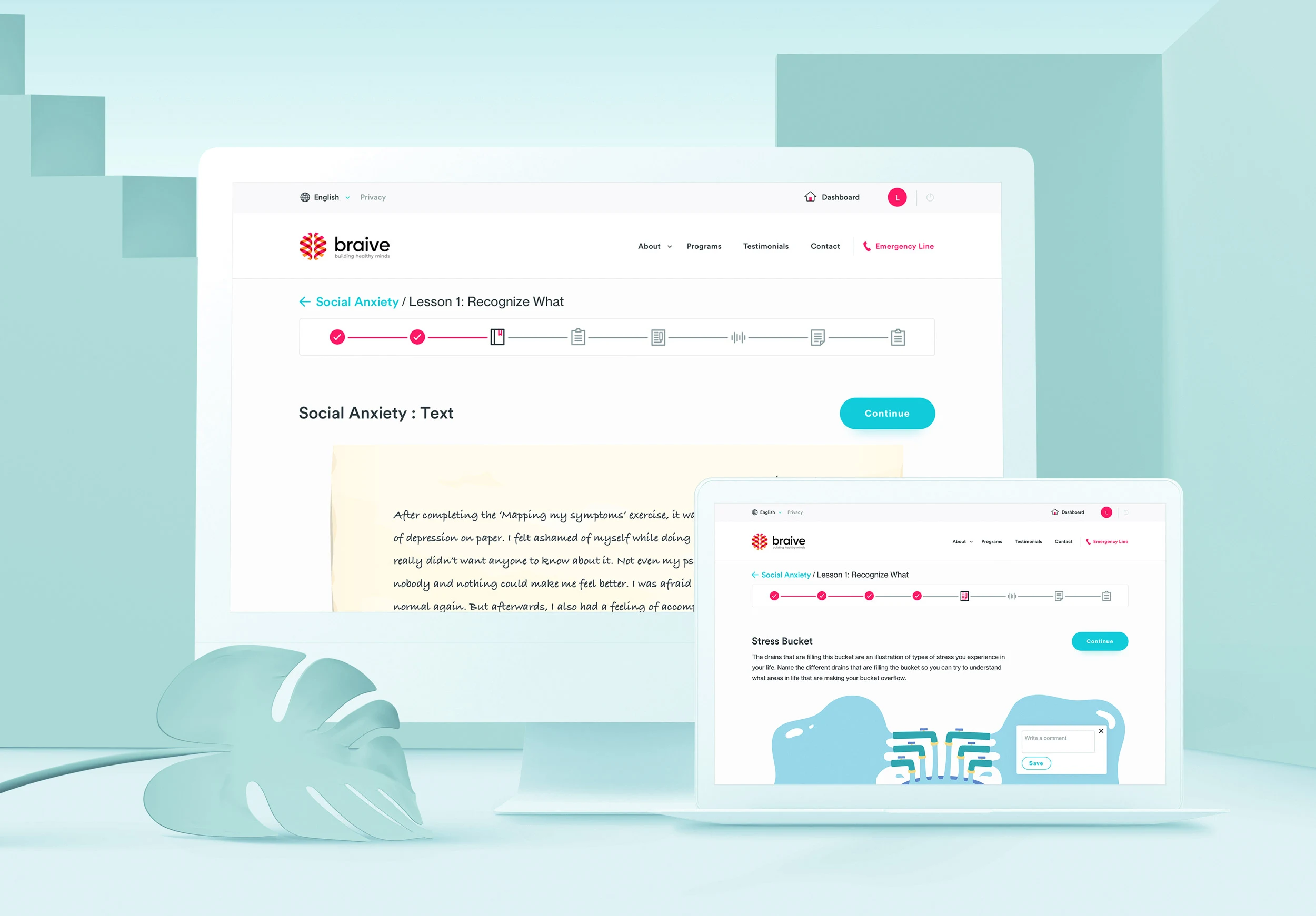
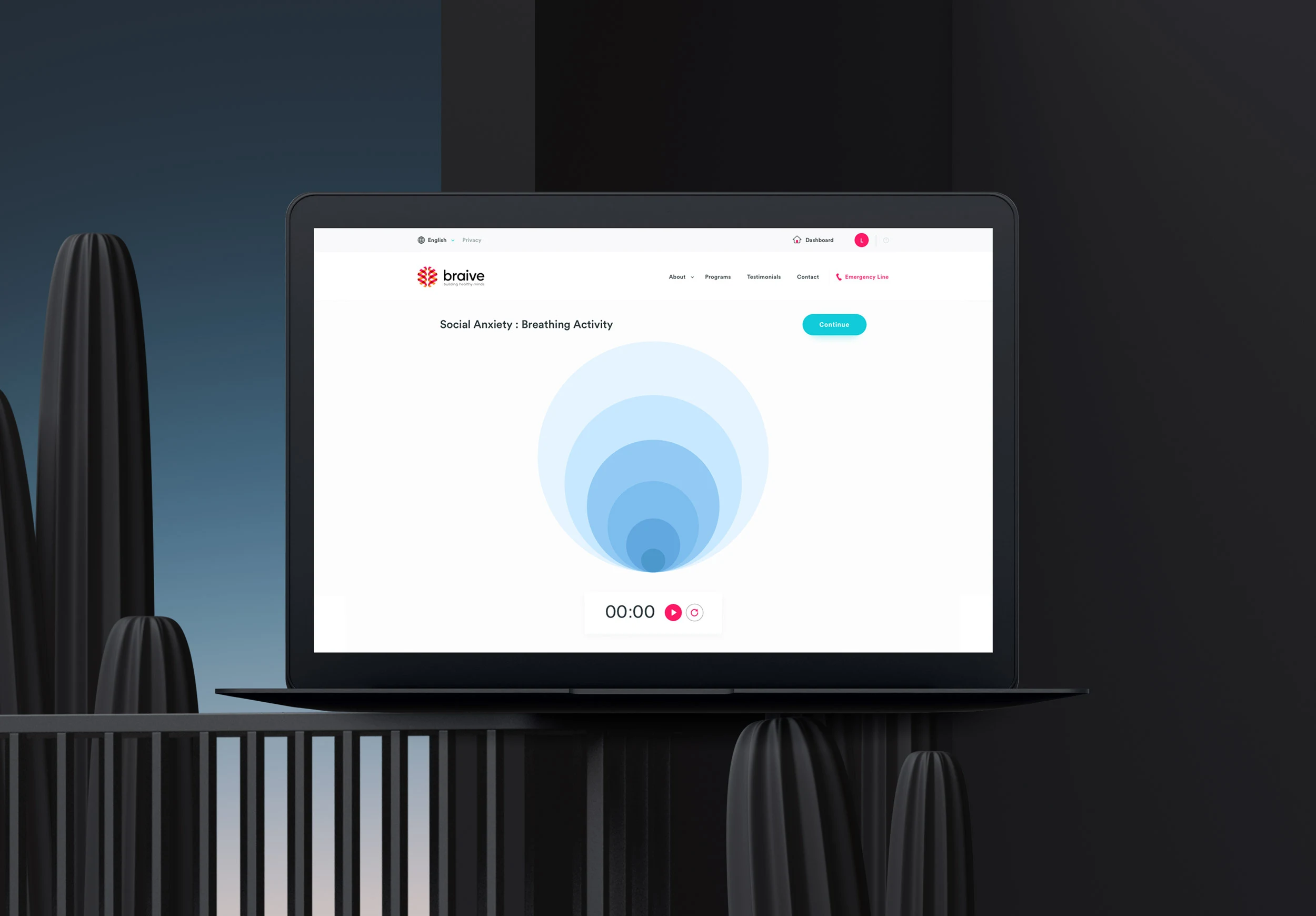
The interaction model and the system patterns. Therapy lived in modules with their own pacing, so the interface had to give users a sense of progress without feeling like a quiz. Custom illustrations replaced stock imagery to reduce trigger risk and build a visual language unique to mental health rather than generic SaaS. Activity modules loaded sequentially to avoid cognitive overload. Accessibility passes were built into every release.
The trade-off
Engagement metrics push you toward push notifications, streaks, and frequent prompts: the standard playbook for habit products. In a clinical context, those mechanics can feel coercive and erode the safety the product is supposed to create. We deliberately under-built the engagement layer: notifications were rare and consent-led, progress data stayed private by default, copy avoided pressure or judgement. Slower retention curves in exchange for a product clinicians could actually recommend.

What it changed
Used by therapists, enterprises, and individuals across multiple regions. The modular foundation let clinical partners build new programs without new UI work. The system did the heavy lifting so the content could stay specific.
Role
Lead Product Designer. Worked alongside psychologists, content writers, and the clinical team to keep the product grounded in real therapeutic practice.