MCC
A century-old institution's web presence became a maintainable platform with shared patterns across teams and time zones.

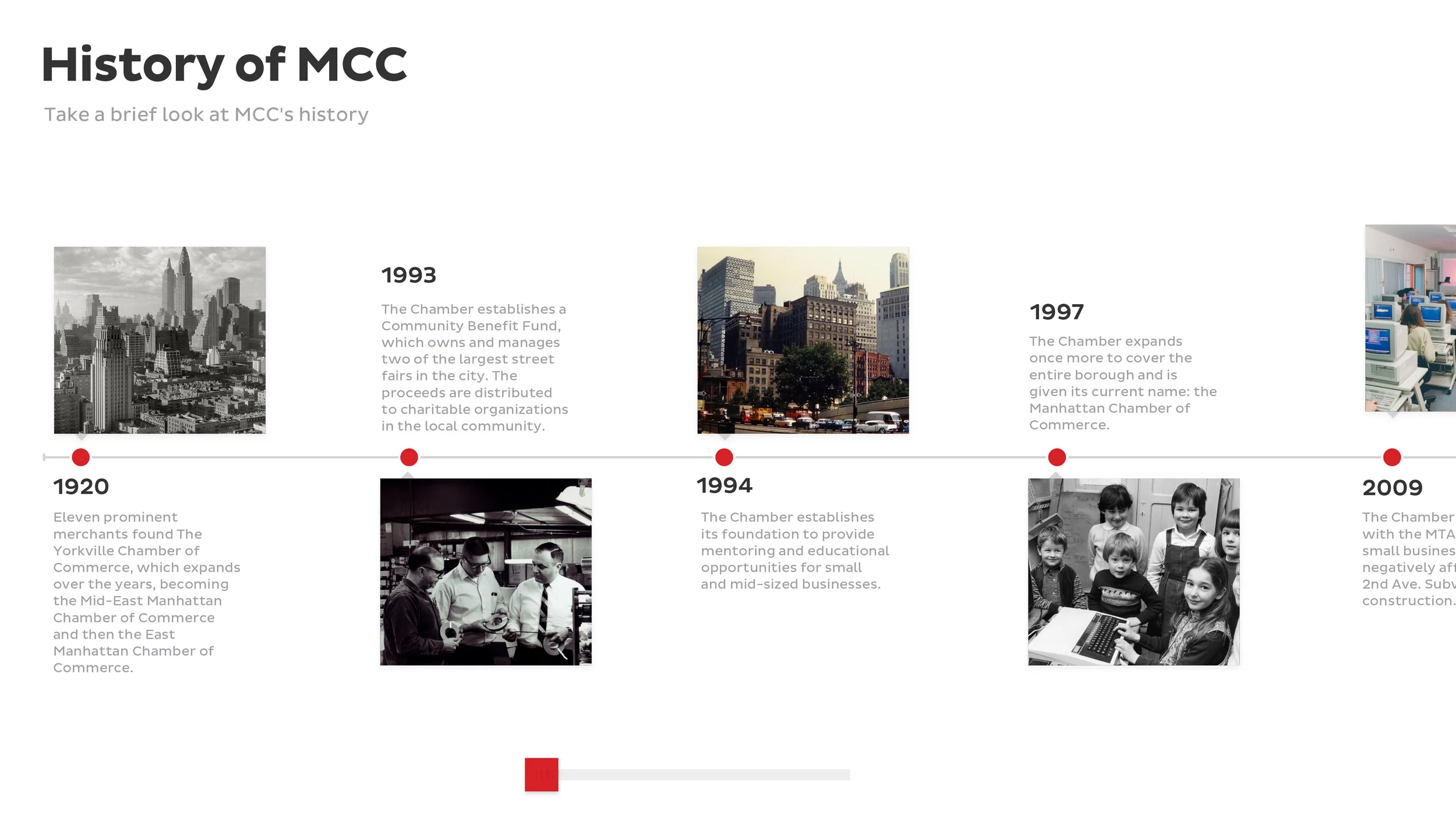
MCC was a redesign of the central web platform for the Manhattan Chamber of Commerce, a century-old organisation with active members, events, content, and a complicated content history. It was also my first large-scale fully-remote project, with teams across three time zones.
Context
Different regions owned different modules with different priorities and workflows. The design had to give everyone a shared foundation without forcing uniformity, and had to be maintainable by contributors who wouldn’t be in the same room as the system that shipped it.
What I designed
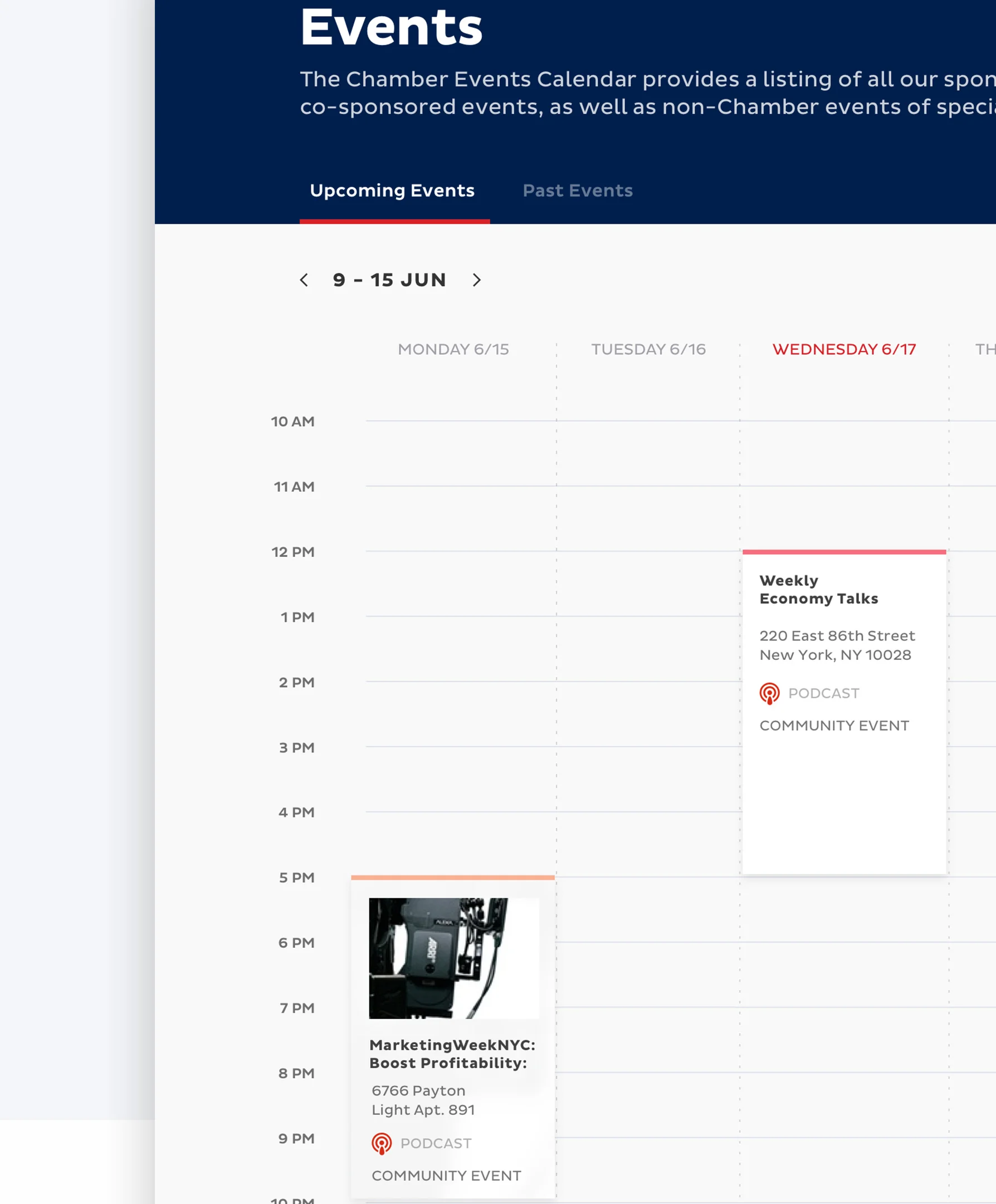
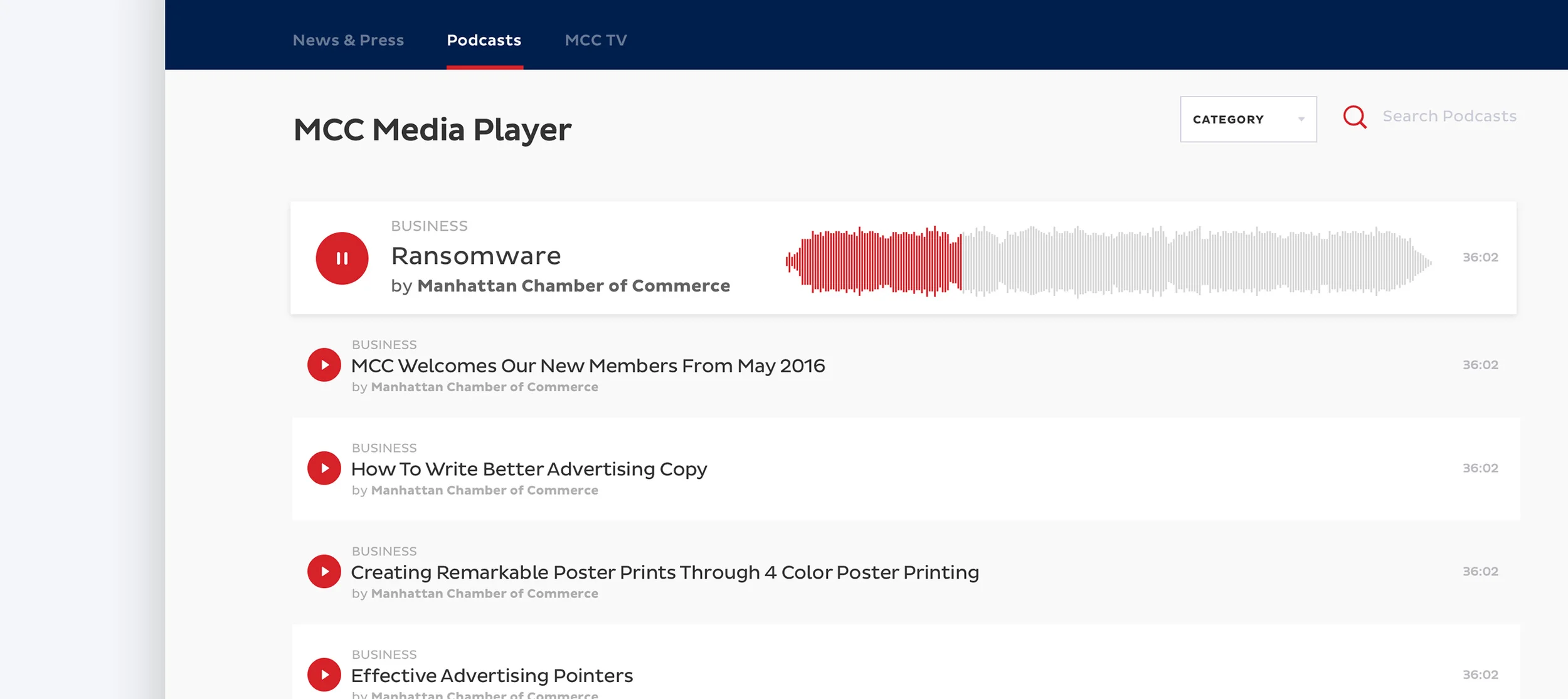
A foundation rather than a finished product. Layout grids, typography scales, interaction logic, and component patterns documented thoroughly enough that distributed teams could work independently without breaking coherence. Design tokens, naming conventions, and templates that let contributors move fast without misalignment.
The decision that shaped it
We could have centralised design ownership and acted as the gatekeeper for every new screen. That model is faster in the short term and brittle in the long term: the moment the central designer leaves, the system stalls. Instead I built distributed decision frameworks: principles teams could apply, not approvals they had to wait on. The trade-off was accepting that some decisions would be made differently than I would have made them, in exchange for a system that didn’t depend on me to keep working.
What it left behind
A stable, dependable platform that brought modern usability to a hundred-year-old institution. Documentation that made updates predictable across time zones. The interface still holds up a decade later, not because it was timeless, but because the structure underneath was strong enough to absorb everything that came after.
Role
Senior Web Designer. Defined design direction, documentation system, and contribution model for remote teams.