Vavda
Call-center teams got one reusable operating model for dashboards, reports, call review, filters, and role-specific workflows.
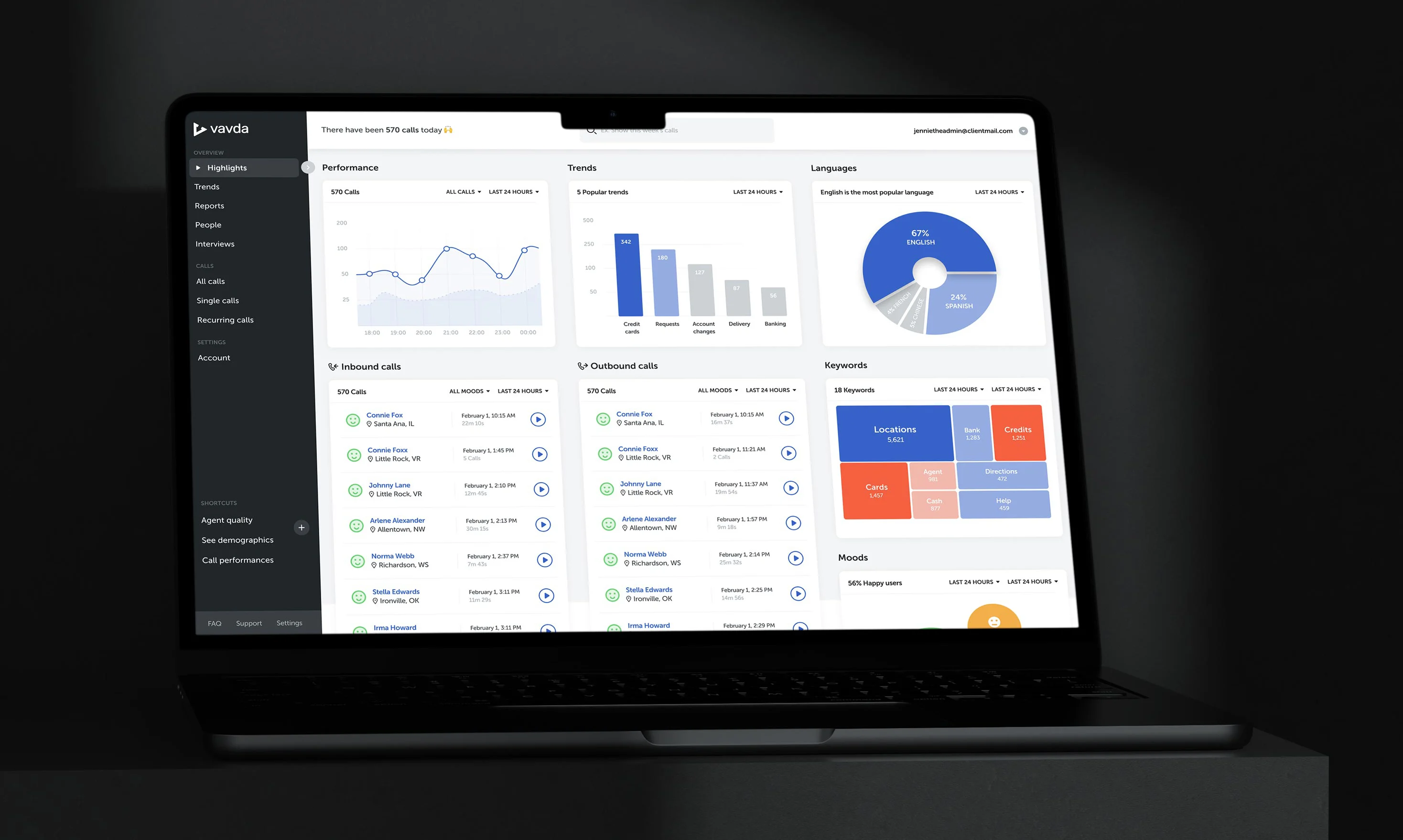
Vavda helped call-center organizations shape their own operations tools around live data, call review, reporting, and performance insight. My work focused on the product frame behind those deployments: the structure that kept tailored workflows consistent, scalable, and easy to navigate.
Context
Call-center teams work inside constant motion: live queues, call quality, customer mood, agent performance, recurring topics, and service-level pressure. Vavda needed to flex across different operating models while still feeling like one coherent product. Managers needed trend and exception visibility. Agents needed a fast path through calls and interviews. Administrators needed templates and configuration that could absorb new requirements without collapsing into one-off screens.
What I designed
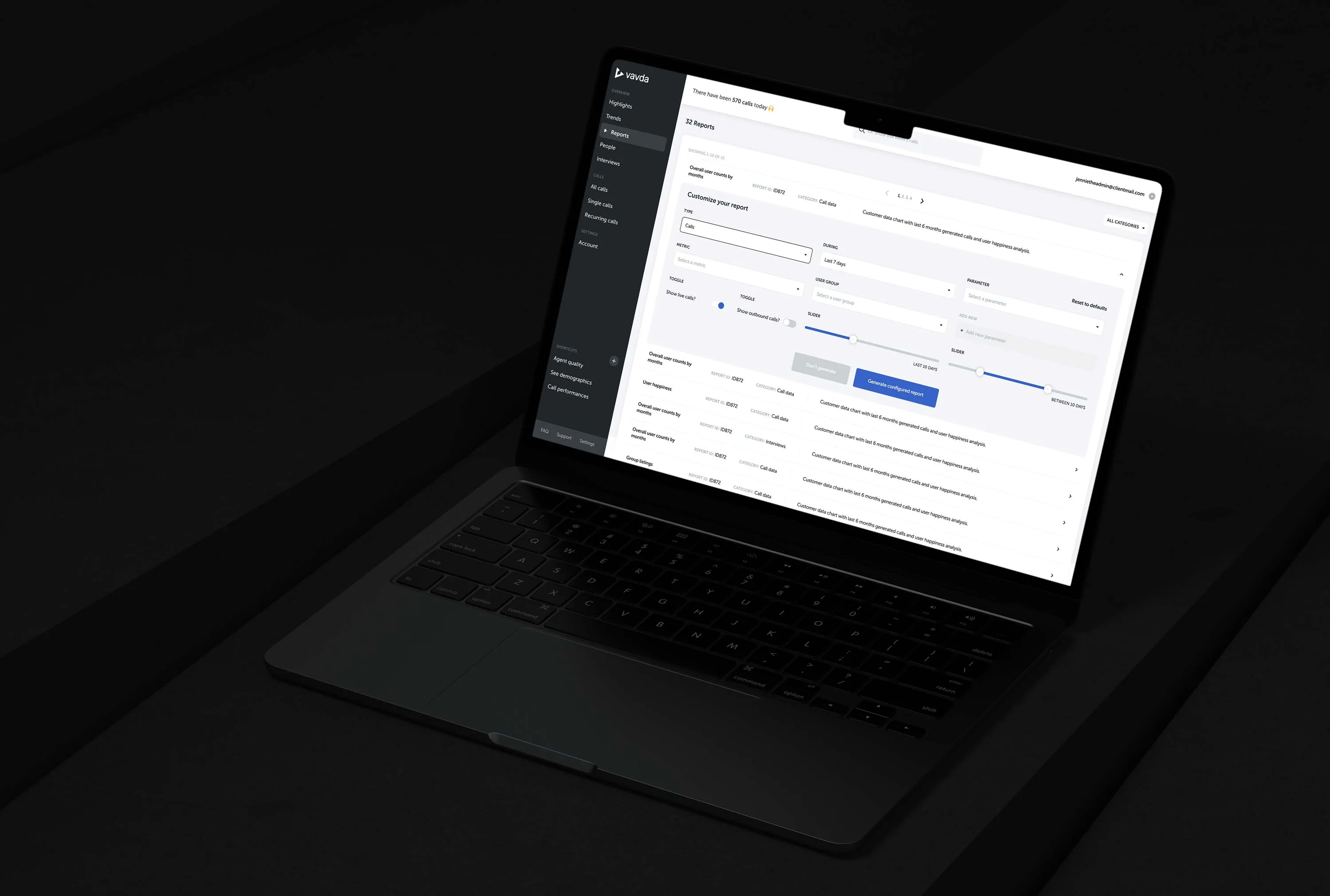
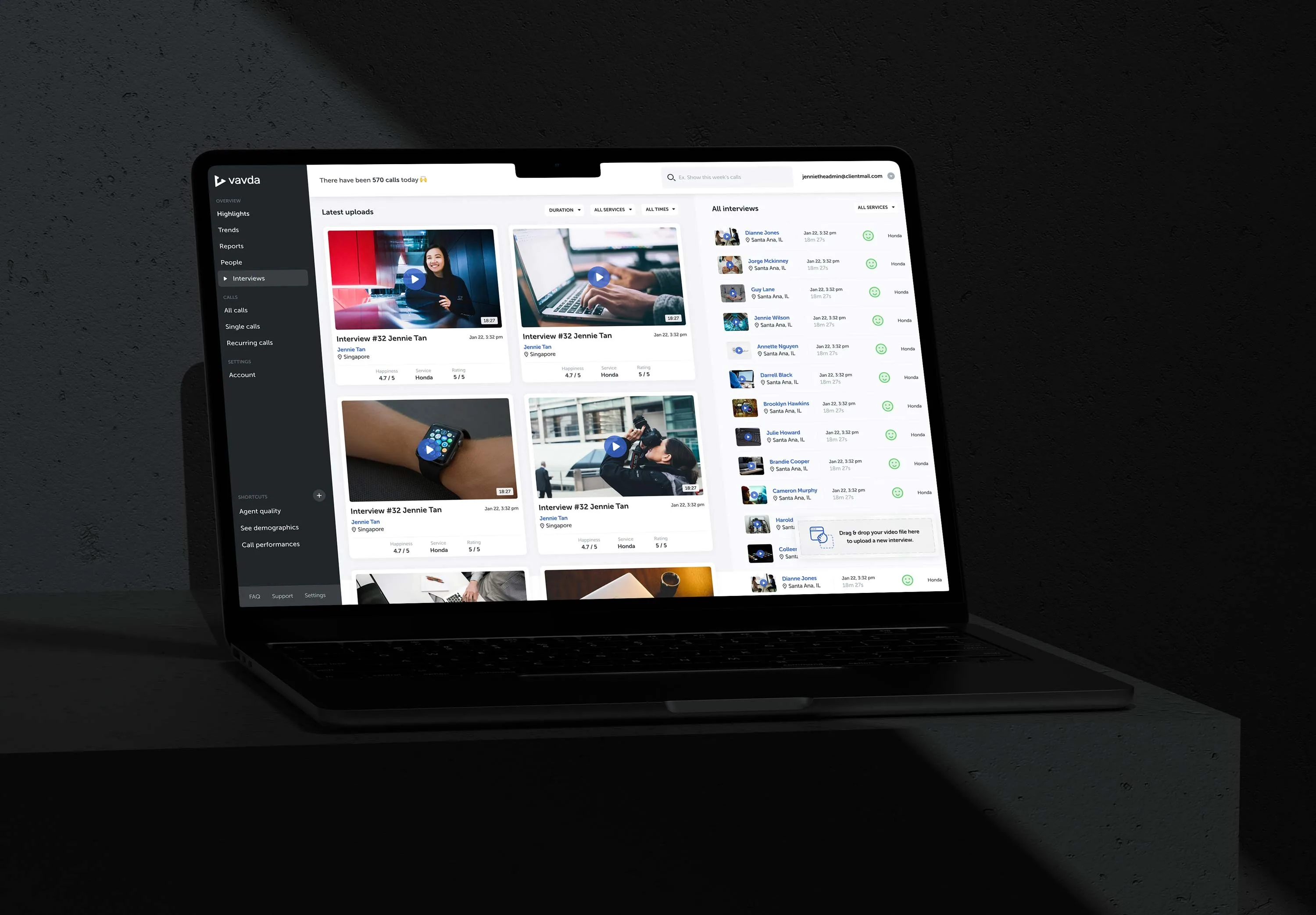
I modelled the product concepts, defined the information architecture, built prototypes, and established the first design system. The early work turned loose feature ideas into a common structure: navigation, reporting templates, filter patterns, call cards, media playback, and dashboard modules that could be recomposed for different call-center deployments without redesigning every screen.
The decision that shaped it
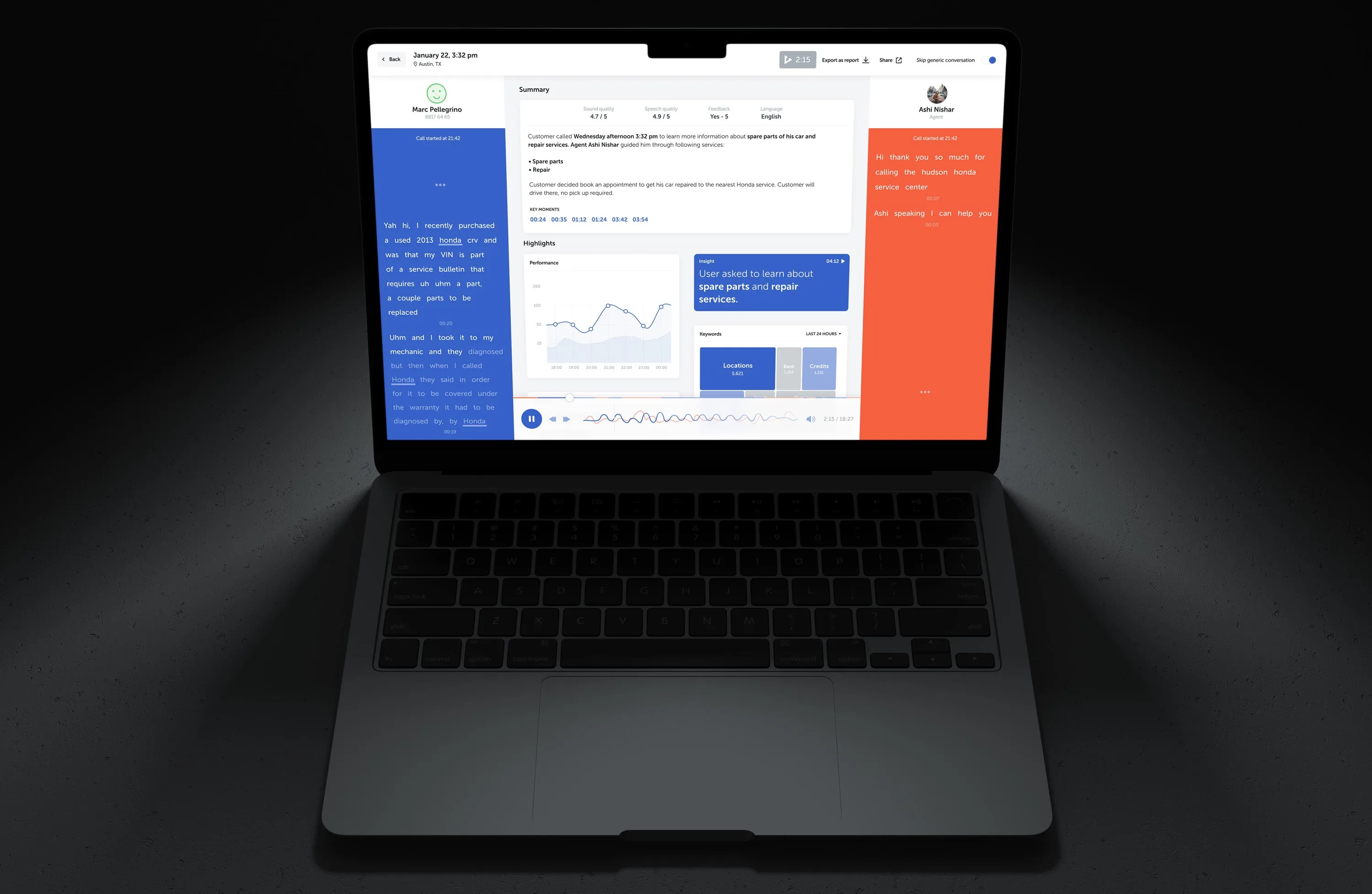
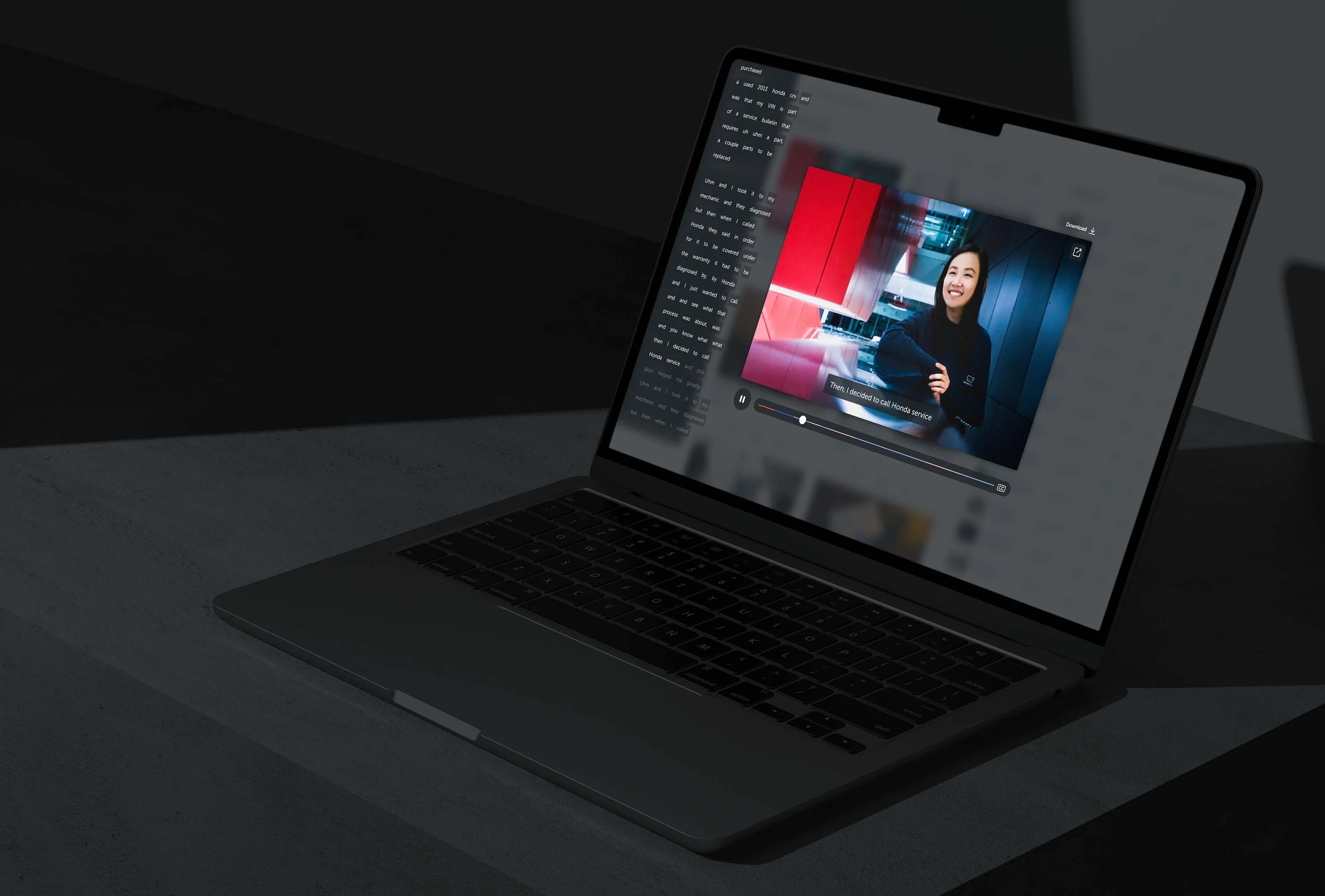
Design the foundation before the variants. A generic dashboard would have flattened every role into the same workflow; bespoke screens would have made the product impossible to maintain. The middle path was a set of reusable surfaces: manager views for trends and anomalies, call pages for transcript and playback review, reporting templates for repeated analysis, and configuration patterns that let different tools still share the same structure.
Clarity under pressure
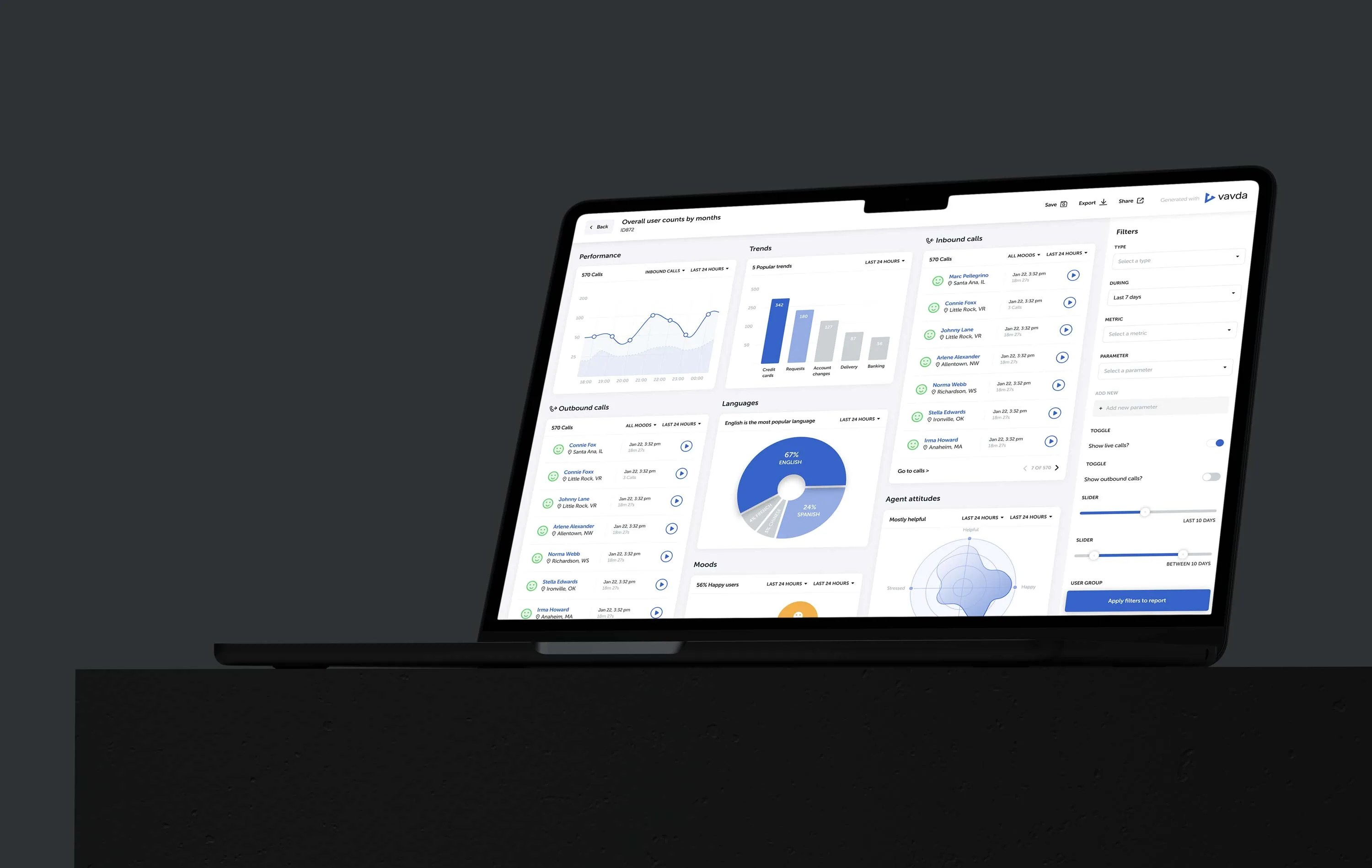
The interface stayed utilitarian on purpose. Dense tables, filters, charts, and media controls had to remain scannable during active operations, even when the exact workflow changed from one deployment to another. Visual analytics pulled out trends such as language, mood, keyword clusters, and inbound or outbound call patterns while leaving the underlying calls accessible for review.
What it changed
Vavda introduced the product’s first design patterns and component library. Role-specific templates improved efficiency, and modular dashboards kept the product usable as operational needs changed. The platform moved from screen-by-screen assembly toward a reusable foundation where new reports, filters, analytics modules, and call-center workflows could be added without breaking the rest of the experience.
Role
Lead Product Designer. Owned concept modelling, information architecture, prototyping, the early component library, and the dashboard, reporting, and configuration patterns that shaped the product foundation.